Documentation
Elements
- <a>
- <altRepresentation>
- <aside>
- <assessment>
- <author>
- <backcover>
- <blockquote>
- <body>
- <bodymatter>
- <caption>
- <code>
- <cover>
- <dd>
- <dl>
- <document>
- <dt>
- <em>
- <figure>
- <figureGroup>
- <frame>
- <frontcover>
- <frontmatter>
- <hd>
- <img>
- <indicators>
- <input>
- <jacketcopy>
- <legend>
- <li>
- <line>
- <linegroup>
- <list>
- <meta>
- <metadata>
- <note>
- <noteRef>
- <p>
- <pagebreak>
- <poem>
- <publication>
- <pullquote>
- <rearmatter>
- <section>
- <source>
- <span>
- <sub>
- <subtitle>
- <sup>
- <table>
- <tbody>
- <td>
- <tfoot>
- <th>
- <thead>
- <title>
- <tr>
Geschiedeniswerkplaats
3.0 FLEX, 4.0 FLEX
Book structure
Use the table of contents to determine the sectioning structure. See Sectioning for more information.
See Table of contents on how to process the toc.
Example:
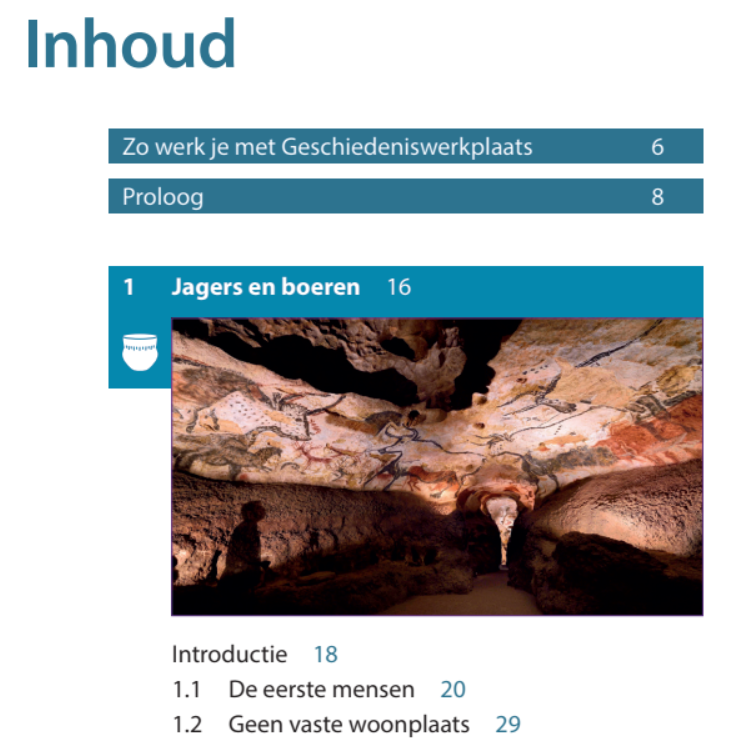
<section level="1" role="introduction">
<hd level="1">Zo werk je met Geschiedeniswerkplaats</hd>
...
</section>
<section level="1" role="prologue">
<hd level="1">Proloog</hd>
...
</section>
<section level="1" role="chapter">
<hd level="1 number="1" label="chapter">1 Jagers en boeren</hd>
..
  <section level="2" role="subChapter">
  <hd level="2">Introductie</hd>
  ..
  </section>
</section>
Please process headings similar to the headings in the red boxes below as <hd> without a section.
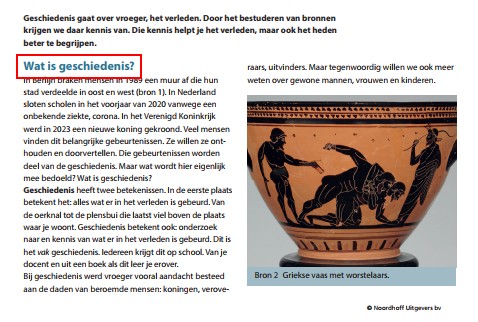
<hd>Wat is geschiedenis?</hd>
<p>In Berlijn braken mensen in ...</p>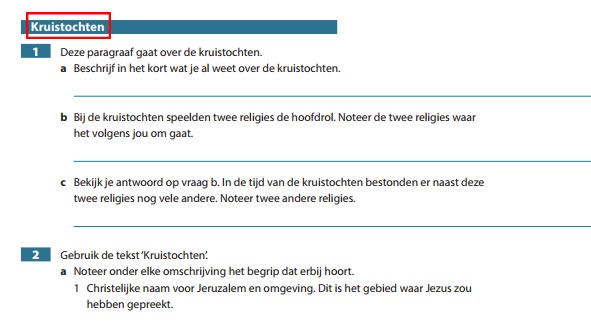
<hd>Kruistochten</hd>
<assessment assessmentType="practice">
<title number="1" label="assessment">1</title>
<p>Deze paragraaf gaat over de kruistochten.</p>
...
</assessment>
Pictograms
The pictograms that you encounter throughout the book should be processed as image. If they occur within an assessment, process them within <indicators>. Otherwise process as inline image. Please fill the alt attribute with the value displayed in the table below.
See Pictograms.
| pictogram | value alt attribute |
 | basisroute |
 | herhalingsroute |
 | plusroute |
 | online |
 | jagers en boeren |
 | grieken en romeinen |
 | monniken en ridders |
 | steden en staten |
 | ontdekkers en hervormers |
 | regenten en vorsten |
Example inline pictogram:
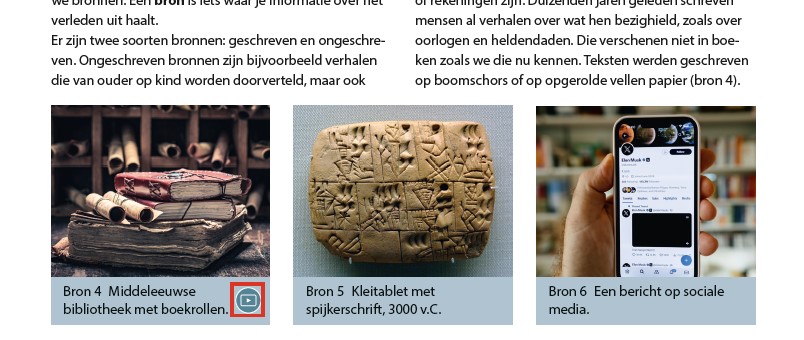
<figure>
<img alt="" role="informative" src="/img/000000_p000-0.jpg" type="photo"/>
<title>Bron 4</title>
<caption>Middeleeuwse bibliotheek met boekrollen. <img alt="online" role="informative" src="/img/000000_p000-1.jpg" type="pictogram"/></caption>
</figure>
Assessments
See Assessments and Input for more information on how to process assessments.
Indicators
The beginning of the book contains a legend with two coloured blocks: yellow and green. Use these images throughout the book within indicators for yellow and green exercises.
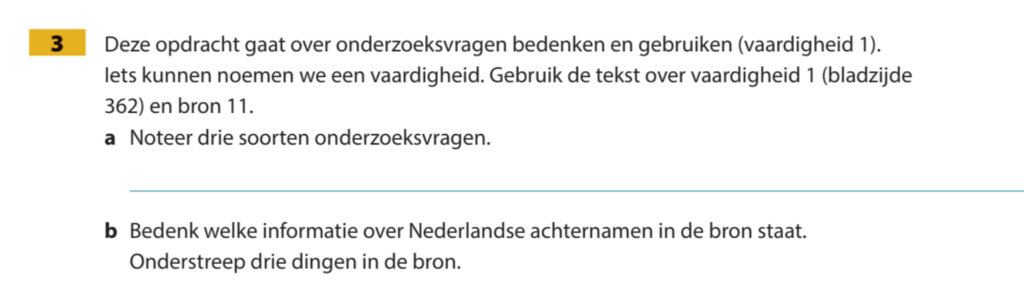
<assessment assessmentType="practice">
<title number="3" label="assessment">3</title>
<indicators><img alt="geel" role="informative" src="/img/16548_p007-2.jpg" type="pictogram"/></indicators>
<p>Deze opdracht gaat over...en bron 11.</p>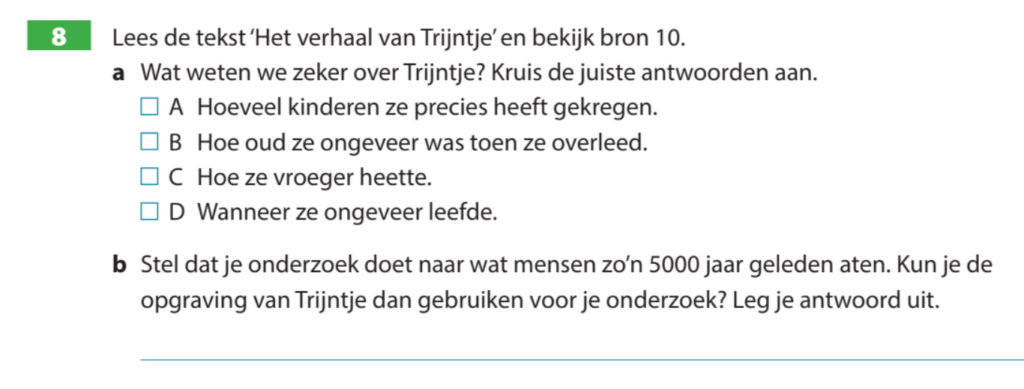
<assessment assessmentType="practice">
<title number="8" label="assessment">8</title>
<indicators><img alt="groen" role="informative" src="/img/16548_p007-3.jpg" type="pictogram"/></indicators>
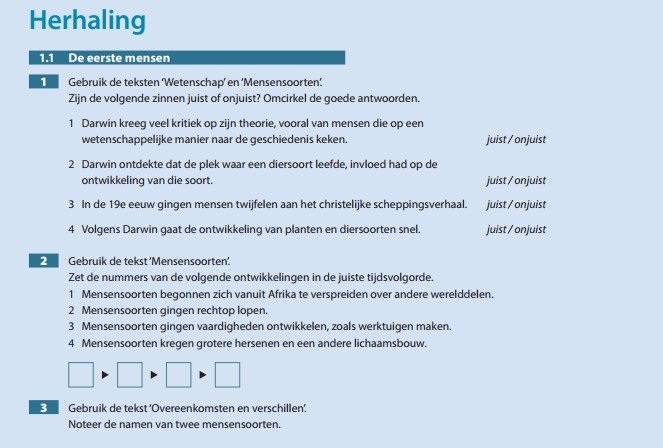
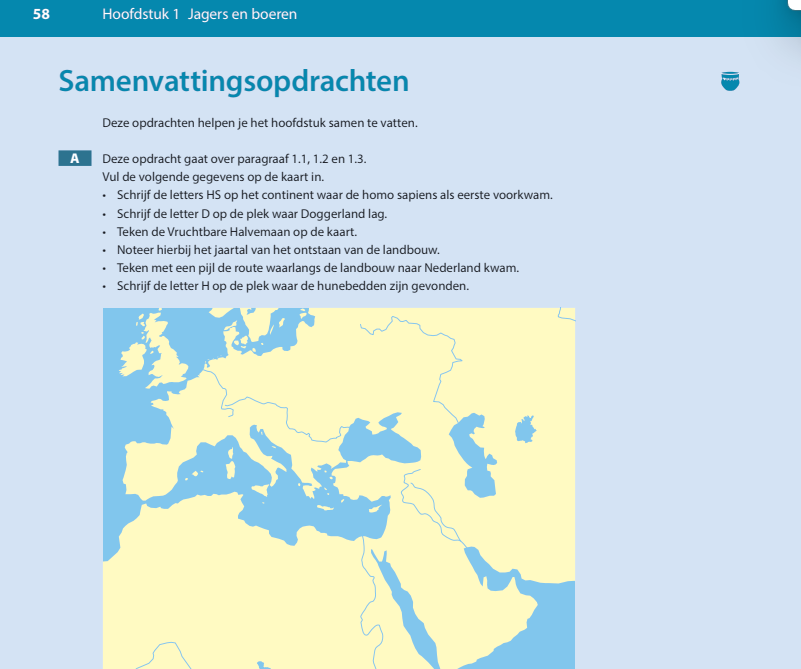
Note that excercises in ‘Herhaling‘, ‘Verdieping‘ and ‘Samenvattingsopdrachten’ sections should be processed as <assessment>.
Example:
Key words
Use the label attribute on emphasized key words within the running text. See em.
Example:
<p>Door het bestuderen van bronnen krijgen we kennis van dat verleden. Maar wat heb je aan die kennis? Het belangrijkste is dat je leert inzien dat er voor de meeste dingen die gebeuren <em type="bold" label="definition">verklaringen</em> zijn. ...</p>Frames
See Frame.
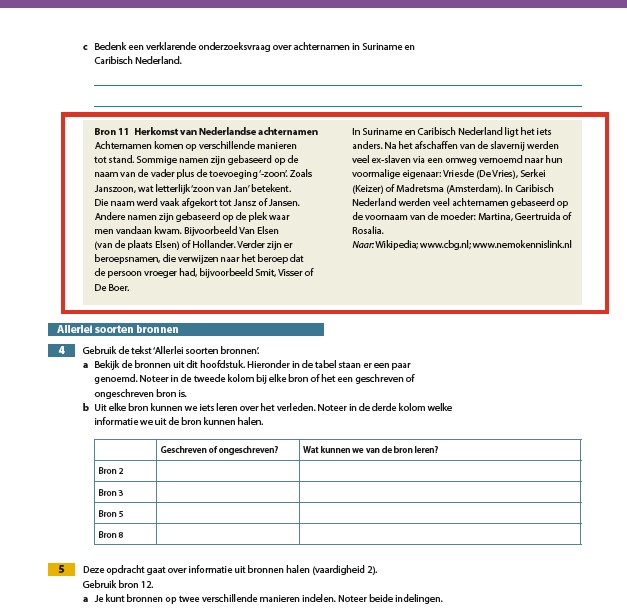
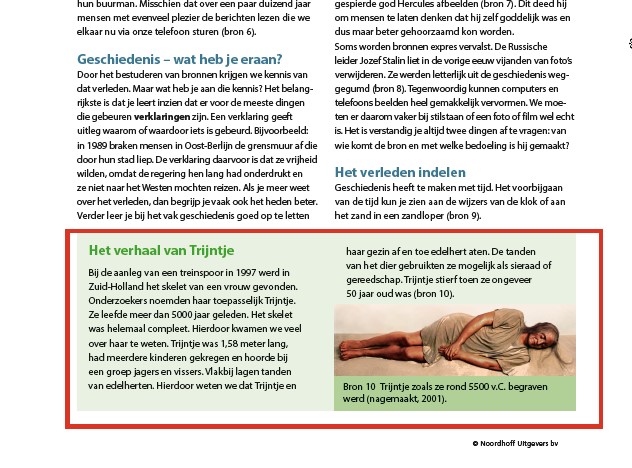
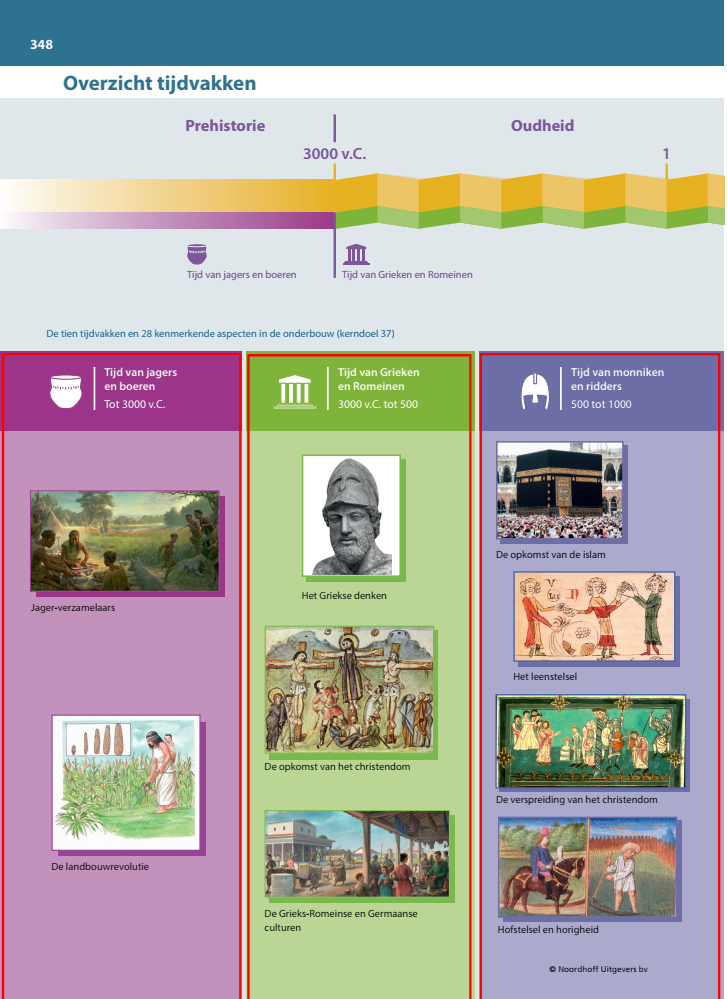
Process each coloured block as a separate frame:
Timelines
There are horizontal timelines in the book. Please process each timeline as a single image and place it on the first page where it appears.
Example:
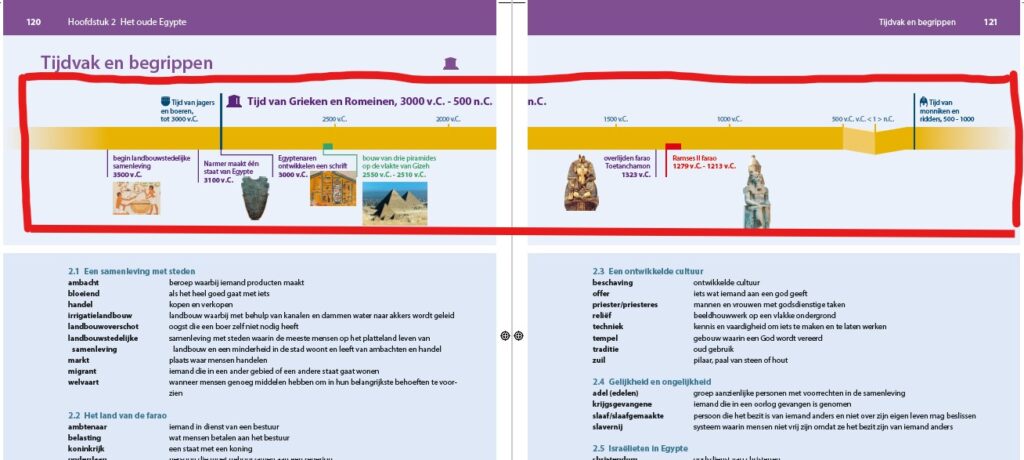
<section level="2" role="subChapter">
<pagebreak id="pb-120">120</pagebreak>
<hd level="2">Tijdvak en begrippen</hd>
<figure>
<img alt="jagers en boeren" role="informative" src="/img/000000_p000-2.jpg" type="timeline">
<altRepresentation>
<list listType="unordered" bulletType="none">
<li><img alt="" role="informative" src="/img/.jpg" type="pictogram"/> Tijd van jagers en boeren, tot 3000 v.C.
<list listType="unordered" bulletType="none">
<li>begin landbouwstedelijke samenleving 3500 v.C.</li>
<li>Narmer maakt één staat van Egypte 3100 v.C.</li>
</list>
</li>
<li><img alt="grieken en romeinen" role="informative" src="/img/.jpg" type="pictogram"/> Tijd van Grieken en Romeinen, 3000 v.C. - 500 n.C.
<list listType="unordered" bulletType="none">
<li>Egyptenaren ontwikkelen een schrift 3000 v.C.</li>
<li>bouw van drie piramides op de vlakte van Gizeh 2550 v.C. - 2510 v.C.</li>
<li>overlijden farao Toetanchamon 1323 v.C.</li>
<li>Ramses II farao 1279 v.C. - 1213 v.C.</li>
</list>
</li>
<li><img alt="monniken en ridders" role="informative" src="/img/.jpg" type="pictogram"/> Tijd van monniken en ridders, 500 - 1000.</li>
</list>
</altRepresentation>
</img>
</figure>
<hd>2.1 Een samenleving met steden</hd>
</section>