Documentation
Elements
- <a>
- <altRepresentation>
- <aside>
- <assessment>
- <author>
- <backcover>
- <blockquote>
- <body>
- <bodymatter>
- <caption>
- <code>
- <cover>
- <dd>
- <dl>
- <document>
- <dt>
- <em>
- <figure>
- <figureGroup>
- <frame>
- <frontcover>
- <frontmatter>
- <hd>
- <img>
- <indicators>
- <input>
- <jacketcopy>
- <legend>
- <li>
- <line>
- <linegroup>
- <list>
- <meta>
- <metadata>
- <note>
- <noteRef>
- <p>
- <pagebreak>
- <poem>
- <publication>
- <pullquote>
- <rearmatter>
- <section>
- <source>
- <span>
- <sub>
- <subtitle>
- <sup>
- <table>
- <tbody>
- <td>
- <tfoot>
- <th>
- <thead>
- <title>
- <tr>
<list>
The <list> element defines a list of items. A <list> contains one or more <li> elements. For more examples of lists, see Assessments.
Notes
For standard lists, do not include the list marker (bullet, number, or letter) in the <listItem> element, as it will be generated automatically by the list type. Only for predefined lists must the list marker be specified as an attribute on the <listItem> element.
Children elements
| Element | Explanation | Required |
|---|---|---|
<li> | See li. |
Attributes
| Name | Explanation | Required |
|---|---|---|
listType | Defines the type of list. Possible values:
| |
numberType | Defines the numbering style of an Possible values:
| |
bulletType | Defines the bullet style of an Possible values:
| |
role | Defines the role of the list. Possible values are:
| |
startNumber | Defines the starting value of the numbering in an Use this attribute only when the list does not start at the default value. For example, if a numeric list starts at 3 instead of 1, use Important: do not use the |
Examples
Standard unordered list
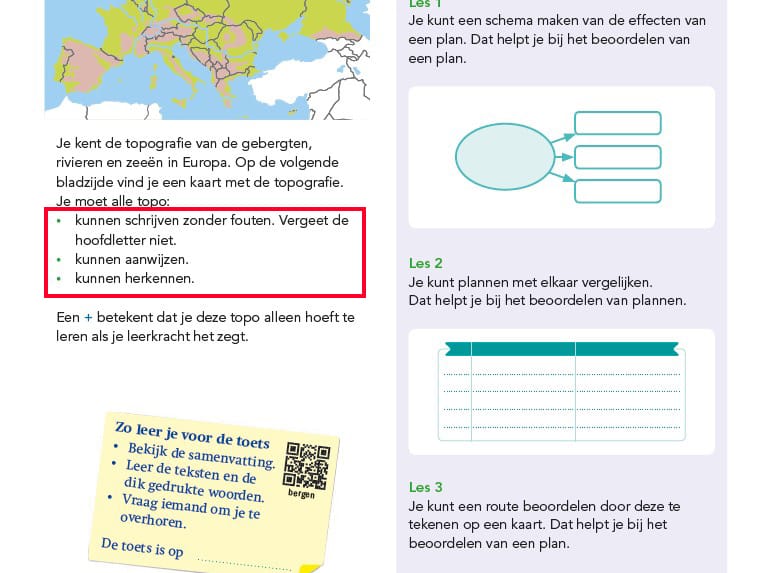
<list listType="unordered" bulletType="circle">
  <li>kunnen schrijven zonder fouten. Vergeet de hoofdletter niet.</li>
  <li>kunnen aanwijzen.</li>
  <li>kunnen herkennen.</li>
</list>
Standard ordered list
<assessment assessmentType="practice">
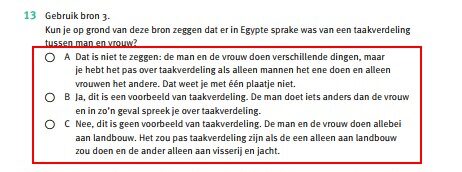
  <title number="13" label="assessment">13</title>
  <p>Gebruik bron 3.</p>
  <p>Kun je op grond van deze bron zeggen dat er in Egypte sprake was van een taakverdeling tussen man en vrouw?</p>
  <list numberType="upperCaseAlpha" listType="ordered">
    <li><input type="checkbox" id="input-1"/> Dat is niet te zeggen...één plaatje niet.</li>
    <li><input type="checkbox" id="input-2"/> Ja, dit is...over taakverdeling.</li>
    <li><input type="checkbox" id="input-3"/> Nee, dit is geen...en jacht.</li>
  </list>
</assessment>
Predefined ordered list

<list listType="ordered" numberType="predefined">
  <li number="1.1.1">Je kunt uitleggen wat een organisme is.</li>
  <li number="1.1.2">Je kunt de zeven levenskenmerken noemen.</li>
  <li number="1.1.3">Je kunt onderscheiden of iets levend, dood of levenloos is.</li>
</list>
List with startNumber
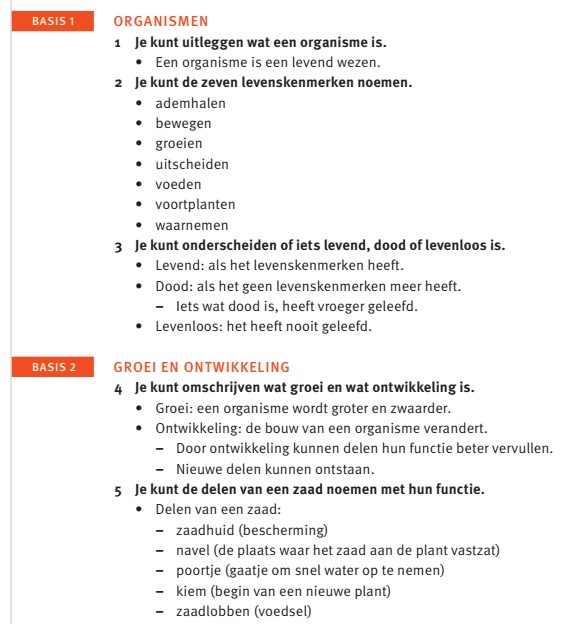
<list listType="ordered" numberType="numeric" startNumber="4">
  <li fontStyles="bold">Je kunt omschrijven wat groei en wat ontwikkeling is.
    <list listType="unordered" bulletType="circle">
      <li>Groei: een organisme wordt groter en zwaarder.</li>
      <li>Ontwikkeling: de bouw van een organisme verandert.
        <list listType="unordered" bulletType="dash">
          <li>Door ontwikkeling kunnen delen hun functie beter vervullen.</li>
          <li>Nieuwe delen kunnen ontstaan.</li>
        </list>
      </li>
    </list>
  </li>
  <li fontStyles="bold">Je kunt de delen van een zaad noemen met hun functie.
    <list listType="unordered" bulletType="circle">
      <li>Delen van een zaad:
        <list listType="unordered" bulletType="dash">
          <li>zaadhuid (bescherming)</li>
          <li>navel (de plaats waar het zaad aan de plant vastzat)</li>
          <li>poortje (gaatje om snel water op te nemen)</li>
          <li>kiem (begin van een nieuwe plant)</li>
          <li>zaadlobben (voedsel)</li>
        </list>
      </li>
    </list>
  </li>
</list>
List wordBank
<assessment type="practice">
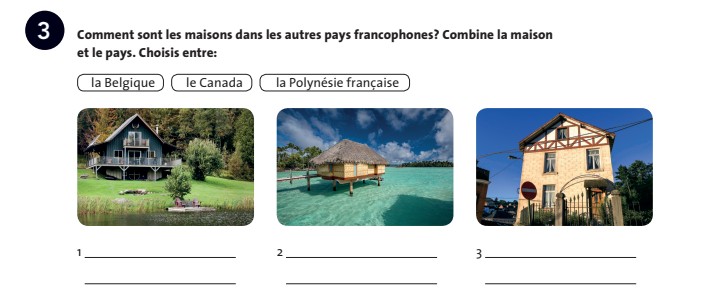
  <title number="3" label="assessment">3</title>
  <p>Comment sont les maisons dans les autres pays francophones? Combine la maison et le pays. Choisis entre:</p>
  <list listType="unordered" bulletType="none" role="wordBank">
    <li>la Belgique</li>
    <li>le Canada</li>
    <li>la Polynésie française</li>
  </list>
  <figure>
    <img alt="" role="informative" src="/img/374319_p059-4.jpg" type="photo"/>
    <caption>1 <input type="textarea" id="input-1"/></caption>
  </figure>
  <figure>
    <img alt="" role="informative" src="/img/374319_p059-5.jpg" type="photo"/>
    <caption>2 <input type="textarea" id="input-2"/></caption>
  </figure>
  <figure>
    <img alt="" role="informative" src="/img/374319_p059-6.jpg" type="photo"/>
    <caption>3 <input type="textarea" id="input-3"/></caption>
  </figure>
</assessment>
Index
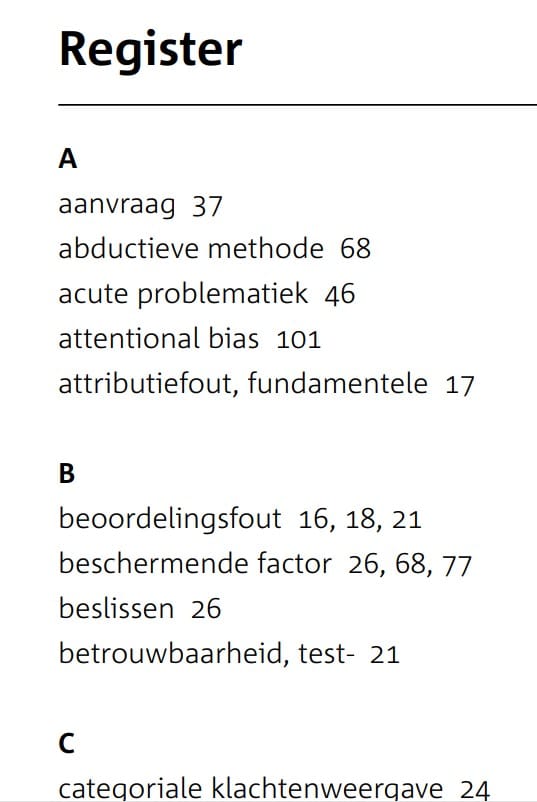
<hd>A</hd>
<list listType="unordered" bulletType="none" role="index">
  <li>aanvraag <a href="#pb-37" type="pageRef">37</a></li>
  <li>abductieve methode <a href="#pb-68" type="pageRef">68</a></li>
  <li>acute problematiek <a href="#pb-46" type="pageRef">46</a></li>
  <li>attentional bias <a href="#pb-101" type="pageRef">101</a></li>
  <li>attributiefout, fundamentele <a href="#pb-17" type="pageRef">17</a></li>
</list>
<hd>B</hd>
<list listType="unordered" bulletType="none" role="index">
  <li>beoordelingsfout <a href="#pb-16" type="pageRef">16</a>, <a href="#pb-18" type="pageRef">18</a>, <a href="#pb-21" type="pageRef">21</a></li>
  <li>beschermende factor <a href="#pb-26" type="pageRef">26</a>, <a href="#pb-68" type="pageRef">68</a>, <a href="#pb-77" type="pageRef">77</a></li>
  <li>beslissen <a href="#pb-26" type="pageRef">26</a></li>
  <li>betrouwbaarheid, test- <a href="#pb-21" type="pageRef">21</a></li>
</list>
Horizontal list
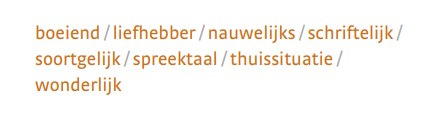
<p>boeiend / liefhebber / nauwelijks / schriftelijk /
soortgelijk / spreektaal / thuissituatie /
  wonderlijk</p>